Friday is here already?  Today’s post is a review for many experienced operators in California, but surprisingly I’ve been getting a lot of questions about 10-minute rest breaks recently by a lot of employers.  So I thought I would have a refresher post for today’s Friday’s Five about some requirements about 10-minute rest breaks under California law:

1. Timing of rest breaks

The 10-minute rest break must be provided to employees who work over three and a half hours.  Employers must authorize and permit employees to take 10-minute rest breaks for every four hours worked, or “major fraction” thereof.  A “major fraction” of four hours is anytime more than two hours.  Insofar as practicable, the rest breaks should be in the middle of each four-hour work period.

2. Rest breaks must be paid

The rest period is considered time worked and must be paid.

3. Rest breaks need to be “authorized and permitted”

Employers are required to “authorize and permit” rest breaks, and there is no affirmative duty for employers to require that employees take rest breaks.  Employers need to ensure that they do not interfere with an employee’s ability to take the rest break, and if the demands of work are such that employees cannot take the rest break, employers should have a system in place to compensate the employee the applicable “wage premium” of one hour of pay at the employee’s regular rate of pay for any violations.

4. Rest breaks do not need to be recorded

Unlike the 30-minute meal breaks, the 10-minute rest break does not have to be recorded in the timekeeping system.

5. Piece rate employees must be paid separately for rest breaks

Employers who paid employees on a piece rate basis need to ensure they comply with Labor Code section 226.2, which took effect in January 2016.  Under Labor Code section 226.2, employers who paid employees on a piece rate basis must pay employees for “rest and recovery periods and other nonproductive time separate from any piece-rate compensation.”  The law requires employers to calculate the regular rate of pay for each workweek, and then pay the piece-rate employees the higher of this regular rate of pay or the applicable minimum wage for rest break time.  The law also requires employers to pay piece-rate employees for “nonproductive time” which is defined as “time under the employer’s control, exclusive of rest and recovery periods, that is not directly related to the activity being compensated on a piece-rate basis.”  The nonproductive time is required to be paid at a rate no less than the applicable minimum wage rate.  In addition, employers who pay employees on a piece-rate basis need to report the pay for rest breaks, recovery periods, and nonproductive time separately on the employees’ pay stubs.  Employers with piece rate employees should consult with experienced counsel to ensure the correct amounts of time are being calculated and paid for under this law.

The City of San Diego’s minimum wage increase and paid sick leave were made effective on July 11, 2016.  Therefore, all employers that have workers who work within the City of San Diego for two hours or more in any week must comply with the minimum wage increase ($10.50/hour) and paid sick leave requirements.  The minimum wage will increase as follows:

Effective Date Minimum Wage Rate
July 11, 2016 $10.50
January 1, 2017 $11.50
January 1, 2019 and each following year Increase tied to Consumer Price Index (CPI)

The City is considering an Implementing Ordinance that would clarify and change some of the provisions of the law, such as:

  • Allowing employers to cap the paid sick leave at 80 hours (currently the ordinance does not permit at cap)
  • Employees may determine how much earned sick leave they need to use, provided that Employers may set a reasonable minimum increment for the use of earned sick leave not to exceed two hours
  • Would allow employers to issue an up-front grant of 40 hours at the beginning of each benefit year as an alternative method of providing employees the paid sick leave (currently the ordinance only permits employers to grant one hour of paid sick leave for every 30 hours worked by the employee)
  • Require employers to provide written notice of the employer’s legal name and any fictitious business names, address, and telephone number.  The notice must also include information on how the employer satisfies the requirements of the law, including the employer’s method of earned sick leave accrual.  This notice must be translated to the employee’s primary language if that language is spoken by at least five percent of the employees at the employer’s workplace.

Employers with employees working within the City of San Diego must take immediate steps to comply with the new requirements, and need to continually monitor what changes to the law that may or may not be made under the Implementing Ordinance.

The City’s Frequently Ask Questions can be viewed here.  Also, employers can review if any of their employees work within the City with reference to the City’s geographical boundaries.

In this Friday’s Five post, I discuss five items that SoCal employers should review to ensure compliance with the minimum wage and paid sick leave increases in many cities and counties that took effect on July 1, 2016 or soon thereafter.

I published this post last year just before the Fourth.  Thinking back on it again this year I want to publish the same post, and hopefully I’ll be able to keep publishing it for many years to come.  Hope you have some time this weekend for put aside your work for a bit this weekend and enjoy some time with your family.  Happy Fourth!

Five things I’m thankful for this Fourth of July:

1.     For the great risk and sacrifice our Founding Fathers took to establish the country. 

WhFourth of Julyen learning about the Founding Fathers in high school history class I did not have a perspective about the risks the Founders took in establishing the country.  Only now that I have a business, a family, and am relatively successful, can I realize the huge risks that the Founders took.  By all means, they were the establishment, the elite of the American society, if anyone had an interest in preserving the status quo it was them.  It is great that their sacrifices of life (theirs and their family members) and their fortunes, helped build the foundation we benefit from today.

2.     The ability to speak freely and practice or not practice any religion I want.

It is great being able to say what you want to say freely and believe in whatever you want.  It is also great be free to practice or not practice any religion you want.  We live in a very tolerant society, and it is even better when the government is not telling you how to live your life.  It is important to remember that throughout history, this has been the exception for how a government normally behaves.

3.     Our country’s ability to attract creative people.

People that like creating things and being productive want to practice their trade where the government will basically leave them alone and provide a good environment to protect their gains from their hard effort (see item #5 below).  The U.S. provides this environment, and that is why so many people come to the U.S. to create a business, or to practice their trade.  It is also important to note that if you were lucky enough to be born in the U.S., it is a great reason to remain in the U.S.

4.     My right to practice any profession I want and unlimited resources to learn the required skills.

No one is dictating what students need to be after they graduate high school or college.  Everyone is free to pursue their interest, and the market decides the value of the effort.  With basically any information freely available on the Internet, anyone can learn almost any skill, and like no other time in human history have an open almost free way to sell your services or products over the Internet.  In your mid-40’s and want to make a career change?  Perfect, and you don’t even need to go back to school as the information is freely available on the Internet.  Didn’t finish college and are 20 years old with an idea?  Perfect.  Venture capitalists don’t care about your pedigree, they basically are only interested if you work hard and don’t give up.

5.     Our legal system.

Yes, it sounds trite.  But while I don’t think our legal system is perfect by any means, it is the best system established in the history of mankind.  Everyone living in the U.S. presently is very lucky to have this benefit.  It is a foundation for many of the items I mentioned above.  Because people have a good basis for predicting the outcomes of their actions, such as being able to retain property legally obtained, and knowing if someone breaches a contract there will be repercussions, it creates an environment that attracts hard effort and the best talent from around the world.  This is why the U.S. has been the leader in ideas and new businesses.  However, just because the system is established it does not mean our work is done.  We have to be vigilant not to lose the fairness, reasonableness, and lack of corruption in the legal system.

Happy Fourth of July.  I have to go start the grill.

Photo: Kim Seng

Next week Los Angeles employers need to comply with new minimum wage and paid sick leave requirements.  I have written about the new laws a lot recently, but wanted to provide five items in today’s Friday’s Five to review in ensuring your company is ready for the new laws for next week’s deadlines:

  1. Understand where your employees work and which laws apply to them.

Just because your business is not located in the City or County of Los Angeles, Pasadena, or Santa Monica does not mean your company can ignore the new laws.  The ordinances passed all include similar provisions that state if an employee works two hours within the City or County the employer must comply with the law:

  • Santa Monica:  Law applies to any employee working a minimum of two hours within Santa Monica in a given week (even if employer is located outside of Santa Monica).
  • City of Los Angeles: “An employee is an individual who performs at least two hours of work in a particular week within the City of Los Angeles….”
  • County of Los Angeles: “Anyone who works at least two hours in a one-week period within the unincorporated areas of Los Angeles County is entitled to the County minimum wage for the hours worked in the unincorporated area of the County.”
  • Pasadena: Applies to employees who perform at least two hours of work in Pasadena.
  1. Don’t assume Los Angeles City’s paid sick leave requirements are the same as state law.

As of July 1, 2016, the City of Los Angeles requires employers with 26 or more employees to provide employees with 48 hours of paid sick leave.  Employers within the City of Los Angeles must review the new law carefully to ensure they are following the City’s paid sick leave requirements, and while there are some similarities with California’s paid sick law, there are many differences.  The City of Los Angeles has very specific requirements about the accrual methods and caps on accrual.  For example, California’s state law allows employers to require employee to use paid sick leave in two hour increments, but the City of Los Angeles does not permit this, so if an employee uses less than two hours the employer can only deduct the actual amount of paid sick leave used by the employee from their sick leave bank.  Also, the City’s law allows employees to use paid sick leave to take care of “any individual related by blood or affinity whose close association with the employee is the equivalent of a family relationship.”  Who is someone with the “equivalent” of a family relationship?  Good question.  Employers must review the new requirements carefully to ensure compliance with these new requirements (and update handbooks and policies if necessary).

  1. Don’t forget to post new notices.

Santa Monica notices:  https://cityofsantamonica.app.box.com/s/nuccal4on935m43p0nhmuzgy65f5mbwl

City of Los Angeles notice: http://wagesla.lacity.org/#information

County of Los Angeles notice: http://file.lacounty.gov/dca/cms1_245570.pdf

Pasadena notice:  http://www.cityofpasadena.net/minimumwage/

  1. Need to know if you are in an incorporated or unincorporated city within Los Angeles County.

Employers who have workers working in any unincorporated area in Los Angeles County must comply with the County’s ordinance.  If workers work in an incorporated city within the County, the incorporated city’s laws would apply, and if the city does not address minimum wage or paid sick leave, then the employer must follow California state law.  However, if an incorporated city, such as Santa Monica, implemented a law, employers must comply with the law that provides the employee with the most benefits and protection.

Click here for resource to determine if your workers work in an incorporated or unincorporated city within Los Angeles County.

  1. Review new hire packets to ensure you are providing all required notices to employees.

 The new laws have some intricacies that employers need to be aware of.  For example, the County of Los Angeles’ new law requires that employers provide employees with written notices setting forth the employer’s tip policy, including any tip sharing, pooling, or allocations policies, if applicable.

Likewise, Santa Monica’s law also sets out requirements pertaining to service charges collected by employers.  Santa Monica requires that all service charges must be distributed to workers who generally performed services for which the charge was collected, and it permits employers to share the service charge with back-of-house employees.  Employers must inform employees of the service charge distribution keep records of the distributions.


Following the City of Los Angeles, the County of Los Angeles implemented a new minimum wage increase for all unincorporated cities within Los Angeles County.  The minimum wage law follows the City’s requirements, but there are a few areas where the County differs, which can be a trap for employers:

1) County of Los Angeles minimum wage poster.

The County published a poster this week that all employers subject to the County’s law are required to post.  According to the County of Los Angeles’ website: “Every Employer shall post this notice in a conspicuous place at any workplace or jobsite located within the unincorporated areas of the County where any Employee works.”

The County’s poster can be downloaded here.

2) Unlike the City of Los Angeles, the County requires the employer to provide written notice of certain items to all employees, which includes new items employers have not had to provide previously – such as tip policies.

Specifically, the County’s ordinance requires the following:

At the time of hire, Employers shall provide each Employee with a written statement disclosing: (1) the Employer’s name, any trade (“doing business as”) names, the physical and mailing address of the Employer’s main office, email address, and the Employer’s telephone number; (2) the Employee’s rate or rates of pay; (3) the Employer’s tip policy, including any tip sharing, pooling, or allocation policies, if applicable; (4) the Employee’s pay basis (e.g., hour, shift, day, week, commission); (5) the formula by which the DCBA can determine the Employee’s rate of pay and total pay; (6) Employee’s established Pay Day for earned wage compensation; (7) each deduction that will be collected from the Employee’s pay each Pay Period; and (8) additional information specified in the Director’s Rules.

Title 8 – Consumer Protection and Business Regulations of the Los Angeles County Code Chapter 8.101.060 B.

The City of Los Angeles does not have a similar provision requiring these written notices to employees.  In addition, while the County’s notice requirements closely track the state of California’s notice requirements under Labor Code section 2810.5 (click here to read more about California state requirements set forth in Labor Code section 2810.5), the County requires additional disclosures to employees, such as:

  • The employer’s tip policy
  • Each deduction that will be collected from the Employee’s pay each pay period

Therefore, employers (especially restaurants) subject to the County’s ordinance, must review the notices provided to employees to ensure that they are complying with all state and County requirements.

3) Having a hard time figuring out if the County’s ordinance applies to your business?

The County published an article explaining how to discovery if the employer’s business is in an unincorporated area of the County, and therefore subject to the County’s minimum wage law.

Here is a list of incorporated cities in the County of Los Angeles, and because they are incorporated, neither the Los Angeles City nor the Los Angeles County minimum wage laws will apply within these cities.

Surfing - Crab BoyWelcome to this weeks Friday’s Five.  In the last two weeks in early June 2016, many local governments in Southern California have passed laws increasing the minimum wage and the amount of paid sick leave benefits to employees.  This Friday’s Five is a summary of five minimum wage and paid sick leave requirements that employers in Southern California should understand.  Employers are required to comply with the law that provides the most benefits to the employees, therefore it is important for employers to understand which laws apply to their operations and to take steps to comply with the quickly approaching deadlines.

State/City Minimum Wage Paid Sick Leave
1) California $10/hr January 1, 2016; $10.50 January 1, 2017; $11/hr January 1, 2018; $12/hr January 1, 2019; $13/hr January 1, 2020; $14/hr January 1, 2021; $15/hr January 2022* Current: 3 days or 24 hours
2) Los Angeles – City (click here for a previous article about Los Angeles City’s minimum wage and paid sick leave laws) July 1, 2016: $10.50/hr; July 1, 2017 $12; July 1, 2018 $13.25; July 1, 2019 $14.25; July 1, 2020 $15.00 * (click here for more information about Los Angeles’s minimum wage ordinance) July 1, 2016: 48 hours*
3) Los Angeles – County Same as LA City No specific requirement – state law applies
4) San Diego City July 2016: $10.50 (date not set yet – likely effective in first half of July 2016); January 1, 2017 $11.50; January 1, 2019 $11.82; January 1, 2020 $12.15; January 1, 2021 $12.49; January 1, 2022 $12.84 5 paid sick days (date not set yet – likely effective in first half of July 2016)
5) Santa Monica (click here for Santa Monica’s website setting for details of the new law) $10.50 July 1, 2016; July 1, 2017 $12.00; July 1, 2018 $13.25; July 1, 2019 $14.25; July 1, 2020 $15.00* January 1, 2017: 32 hours for small businesses, 40 hours for large businesses; January 1, 2018: 40 hours for small business, 72 hours for large businesses*
*Employers with 25 or fewer employees the implementation is delayed one year.

Photo: crab boy

Los AngelesLos Angeles city past a new law on June 1, 2016 requiring employers with 26 or more employees to provide employees with 48 hours of paid sick leave per year.  This is twice the amount required by California state law.  The kicker: employers must develop policies, adjust payroll, and put the new requirement into effect by July 1, 2016.  Employers in the City of LA must comply with the law that provides more benefits to the employee, and this means many employers must immediately start implementing payroll and policy changes to meet this short deadline.  This Friday’s Five reviews five items Los Angeles city employers need to know about the new law to comply in less than 30 days:

1. Accrual methods

Employees who on or after July 1, 2016 work in the City of Los Angeles for the same employer for 30 days or more within one year from starting work for the employer is entitled to paid sick leave under the city law.  Paid sick leave accrues on the first day of employment or July 1, 2016, whichever is later.  Even though the employee is accruing paid sick leave, the employee is not entitled to use paid sick leave until the beginning on the 90th day of employment or July 1, 2016, whichever is later.

Two methods of providing paid sick leave:

  • Up front grant – by providing the entire 48 hours to an employee at the beginning of each year of employment, calendar year, or 12-month period or
  • By providing the employee one hour of sick leave per every 30 hours worked.

LA city’s law is different than state law in this regard.  State law allows for different options for employers to accrue paid sick leave, and under state law if the employer uses the up front grant method, there is no carry over requirement into the new year.  However, the LA city law requires up to 72 hours to carry over to the next year, even under the up front grant.

2. Caps on accrual

Employees are entitled to take up to 48 hours of sick leave in each year of employment, calendar year, or 12-month period.  Accrued unused paid sick leave shall carry over to the following year of employment and may be capped at 72 hours.

3. Employee’s notice requirements and doctor’s note requirement

An employer must provide paid sick leave upon the oral or written request of an employee for themselves or a family member, or any “individual related by blood or affinity whose close association with the employee is the equivalent of a family relationship.”  What is an individual relationship that is the equivalent of a family relationship?  Good question, and the law does not clarify what is meant to be covered by this requirement.

Differing from state law, the LA city law does set that an employer may require an employee to provide “reasonable documentation” of an absence from work to use paid sick leave.

4. No payout of unused paid sick leave upon separation

Accrued and unused paid sick leave does not need to be paid out at separation from employment.  This is similar to state law.

If employee separates from the employer, and then is rehired by the employer within one year, the previously accrued and unused paid sick time must be reinstated.

An employee may not waive their rights to the city’s paid sick leave law.

5. Minimum wage increase

As a reminder, the ordinance also increases the minimum wage for workers within Los Angeles city (as previously written about here).

Starting July 1, 2016, the minimum wage in the City of Los Angeles will increase according to the following rate:

Effective Date Employers With 26 or more Employees Employers with 25 or fewer Employees or Non-Profit corporations with 26 or more Employees with approval to pay a deferred rate
7/1/2016 $10.50 Deferred
7/1/2017 $12.00 $10.50
7/1/2018 $13.25 $12.00
7/1/2019 $14.25 $13.25
7/1/2020 $15.00 $14.25
7/1/2021 $15.00 $15.00

Los Angeles County also passed an ordinance that tracks this schedule, and applies to Los Angeles County, except for any incorporated cities within the County.

As a reminder, I will be speaking about this new law, and other mid-year legal updates at our seminar and mixer on June 22, 2016 at the Westside Tavern in Los Angeles.  Registration and additional information can be found here.

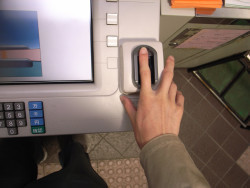
Fingerprint scans, facial recognition, and retinal scans only a few years ago sounded like farfetched futuristic technology, but given the quickly advancing technology, these items are being used more and more in the workplace.  Today’s Friday’s Five discussed five items California employers should know about their legal obligations regarding the employee’s biometric information obtained during employment:

1. California Labor Code section 1051 – prohibition on employers from sharing biometric information with third parties.

This little known Labor Code section prohibits California employers of obtaining fingerprints or photographs from employees and then sharing this information to a third party.  Violation of the section is a misdemeanor.  Therefore, employers are not prohibited from collecting fingerprint information from employees, but are restricted from sharing this information with an outside third party.

2. Biometrics in timekeeping systems.

While there is no prohibition in using biometrics such as finger prints or hand prints in time keeping systems to verify an employees’ identity, employers must use caution in implementing these types of systems.  As discussed above, Labor Code section 1051 prohibits employers from sharing this information with a third party.  Therefore employers must take steps to ensure the vendor providing the technology does not have access to the biometric information.  Moreover, employers that obtain this information must be careful to protect the information from inadvertent disclosures to third parties.  Disclosures from being hacked or unintentional inadvertent disclosure by the employer would likely be actionable under Labor Code section 1051 and California’s constitutional right to privacy.

3. Cost of photographs for employment must be paid for by employer.

Labor Code section 401 prohibits employers from requiring employees to submit a photograph from an applicant or an employee without paying for the cost of the photograph.  Obviously employers cannot discriminate against applicants based on race, gender, age, or other protected categories, but just as this information could be learned from a photograph, it would likewise be learned by the employer during a face-to-face interview.  Therefore, other than having to pay for the costs of the photograph, employers may ask for or take photographs during the hiring process as long as all prohibitions against discrimination are likewise followed.

4. Use of photographs of employees.

California Civil Code Section 3344, prohibits the use of a person’s “name, voice, signature, photograph, or likeness” in advertising or selling a product without the person’s prior consent.  Penalties under this section are the greater of $750 or actual damages suffered by the person as a result of each unauthorized use, any profits that are attributable to each unauthorized use, and attorneys’ fees and costs.  Punitive damages are also available to the prevailing party.  Therefore, employers who use the employee’s likeness in any advertising materials should consider obtaining written consent from employees to use their likeness in any marketing or advertising literature.

5. Employers must be careful to comply with other states’ biometric laws.

Facebook, Google and other technology companies are quickly learning about the intricacies of Illinois’ Biometric Information Privacy Act (BIPA).  The companies have been subject to litigation for alleged violation of the Illinois’ law on the grounds that Facebook and other tech companies’ using facial recognition in pictures stored to its software do not comply with the notice and consent requirements of the BIPA.  The law, passed in 2008, requires anyone gathering biometric information to provide certain notifications to the person whose data is being collected, and written permission to collect the information.  Facebook, for example, has asked for the case to be dismissed since its terms of service establishes that California law applies to any dispute.  Therefore, Facebook is arguing that because California does not have a similar law to Illinois’ BIPA, the case should be dismissed.  So far, that argument has not been successful and the case is proceeding against Facebook.  Employers operating in multiple states should pay careful attention to state statutes to ensure they are compliant with any applicable laws.  It is also likely that more and more states will enact similar laws to Illinois’ BIPA in the near future given the quickly advancing technology.

Photo: Toshiyuki IMAI

Businesses that have worksites or operate within Los Angeles City or County need to review the minimum wage laws that go into effect July 1, 2016.  While there are still many unanswered questions about the ordinances, there are key items employers need to start reviewing now to ensure compliance by the July 1, 2016 implementation.  For today’s Friday’s Five, here are five issues employers need to understand about the Los Angeles minimum wage law:

  1. What is the new Los Angeles minimum wage?

Starting July 1, 2016, the minimum wage in the City of Los Angeles will increase according to the following rate:

Effective Date Employers With 26 or more Employees Employers with 25 or fewer Employees or Non-Profit corporations with 26 or more Employees with approval to pay a deferred rate
7/1/2016 $10.50 Deferred
7/1/2017 $12.00 $10.50
7/1/2018 $13.25 $12.00
7/1/2019 $14.25 $13.25
7/1/2020 $15.00 $14.25
7/1/2021 $15.00 $15.00

Los Angeles County also passed an ordinance that tracks this schedule, and applies to Los Angeles County, except for any incorporated cities within the County.  See below for maps and further details.

  1. What are the potential penalties for violation of the City’s ordinance?

An employer who violates minimum wage requirements is liable to the employee for payment of back wages and an additional penalty of $100 for each day that the violation occurred or continued.  Where retaliation has occurred, the employee is entitled to reinstatement and a trebling of all back wages and penalties.

In addition, employers are subject to administrative fines as set forth below:

Administrative Fines

Failure to post notice of the Los Angeles Minimum Wage rate $500 per day per employee
Failure to allow access to payroll records $500 per day per employee
Failure to maintain payroll records or to retain payroll records for your years $500 per day per employee
Failure to allow access for inspection of books and records or to interview employees $500 per day per employee
Retaliation for exercising rights under the ordinance $1,000 per day per employee
Failure to provide employer’s name, address, and telephone in writing $500 per day per employee
Failure to cooperate with the Division’s investigation $500 per day per employee
Failure to post Notice of Determination to employee $500 per day per employee

The maximum administrative fine that could be paid to the City for each type of violation is $5,000 per employee per year, except for a retaliation violation the maximum is $10,000 per employee per year.  The County’s ordinance does not track the City’s penalties exactly, but the penalties are still very substantial.

  1. Which agency will enforce compliance with the City’s ordinance?

 The Department of Public Works, Bureau of Contract Administration, is the Designated Administrative Agency for the Ordinance and has the administrative responsibilities to implement the guidelines and rules.  The BCA will be the agency that investigates any claims for minimum wage violations, enforcement of the notice, posting, or payroll records requirements, and complaints of retaliation.

It is important to note that the ordinance provides that any adverse action against an employee within 90 days of the employee’s exercise of protected rights may be construed as retaliation for the exercise of such rights.

  1. What are employer’s new notice requirements?

Under Los Angeles City’s ordinance, every employer must post in a clearly visible place at any workplace or job site where any employee works, the notice published each year by the Division informing employees of the current minimum wage rate and of their rights under the Ordinance.  The notices made available by the Division can be downloaded from its website here: http://wagesla.lacity.org/#information.  The English and Spanish poster is embedded below.

Notices must be translated if at least 5% of the employees at the workplace or job site speak a different language.  It is not clear which “workplace” should be evaluated if an employer does not have a job site not within Los Angles city or county.  Just another unanswered question about this regulation.

Los Angeles County’s ordinance also sets forth that employers within the County must post a similar notice that is to be developed by the County’s Department of Consumer and Business Affairs (“DCBA”), which is required to make this notice available to employers to post.  However, at the time of this article, the DCBA’s website does not have the notice available.

  1. How can a company determine the city or county boundaries?

The city of Los Angeles published a FAQ that “recommend visiting http://zimas.lacity.org/ as a reference” to determine the City’s boundaries.  The city’s ordinance only applies to companies located or conduct business in the incorporated city limits.  The County of Los Angeles also passed an ordinance that closely tracks the city’s ordinance as discussed above, and the County ordinance will apply to businesses within the County, but not within the City of Los Angeles, or other incorporated cities within the County.  Click here for a map of the County of Los Angeles that also sets forth the incorporated cities.

It is important for employers to understand if the City or County requirements apply to their workforce, and understand the difference between the two.  I’m sure this is not the last article I write on this topic.  Stay tuned.

Also, if you would like to learn more about this topic, I am having a seminar on June 22, 2016 that will discuss these minimum wage developments, as well as other legal developments that employers need to be aware at this mid-point in 2016.  More information about the event can be found here.