California employers have extensive obligations under the Labor Code to create and maintain accurate time records and pay stubs. The Labor Code itself doesn’t prescribe a specific format or technology, but the way employers handle these records has only grown more important — particularly after the 2024 Private Attorneys General Act (PAGA) reform, which ties


California employers face one of the most complex and actively enforced wage-and-hour landscapes in the country, and most of that complexity gets triggered the moment a schedule is built. Daily overtime, meal and rest break timing, premium pay obligations, split shifts, reporting time pay, and PAGA exposure all flow from how shifts are scheduled and

July 1 is just around the corner, and with it comes another wave of local minimum wage increases across Southern California. For employers operating in multiple jurisdictions—particularly those with hotel, hospitality, or healthcare workers—the compliance landscape continues to grow more complex. Beyond the day-to-day importance of paying the correct rate, accurate wage compliance is now

If you are a California employer, there is a major unresolved issue in PAGA litigation that could significantly impact your exposure—and your ability to enforce your arbitration agreements.

It is called a “headless” PAGA claim, and right now, California courts are split on whether these claims are even allowed.

The result: uncertainty, inconsistent outcomes, and

On February 6, 2026, the California Labor and Workforce Development Agency (LWDA) published a Notice of Proposed Rulemaking to adopt the first-ever set of formal regulations governing PAGA’s administrative procedures. That sentence alone should get the attention of every California employer.

Since PAGA was enacted in 2004, and even after the landmark 2024 reforms, there

What “Reasonable Steps” Really Mean in 2026: How California Employers Reduce PAGA and Employment Litigation Exposure

As California employers move through 2026, one thing is clear: employment litigation—and PAGA litigation in particular—is not slowing down.

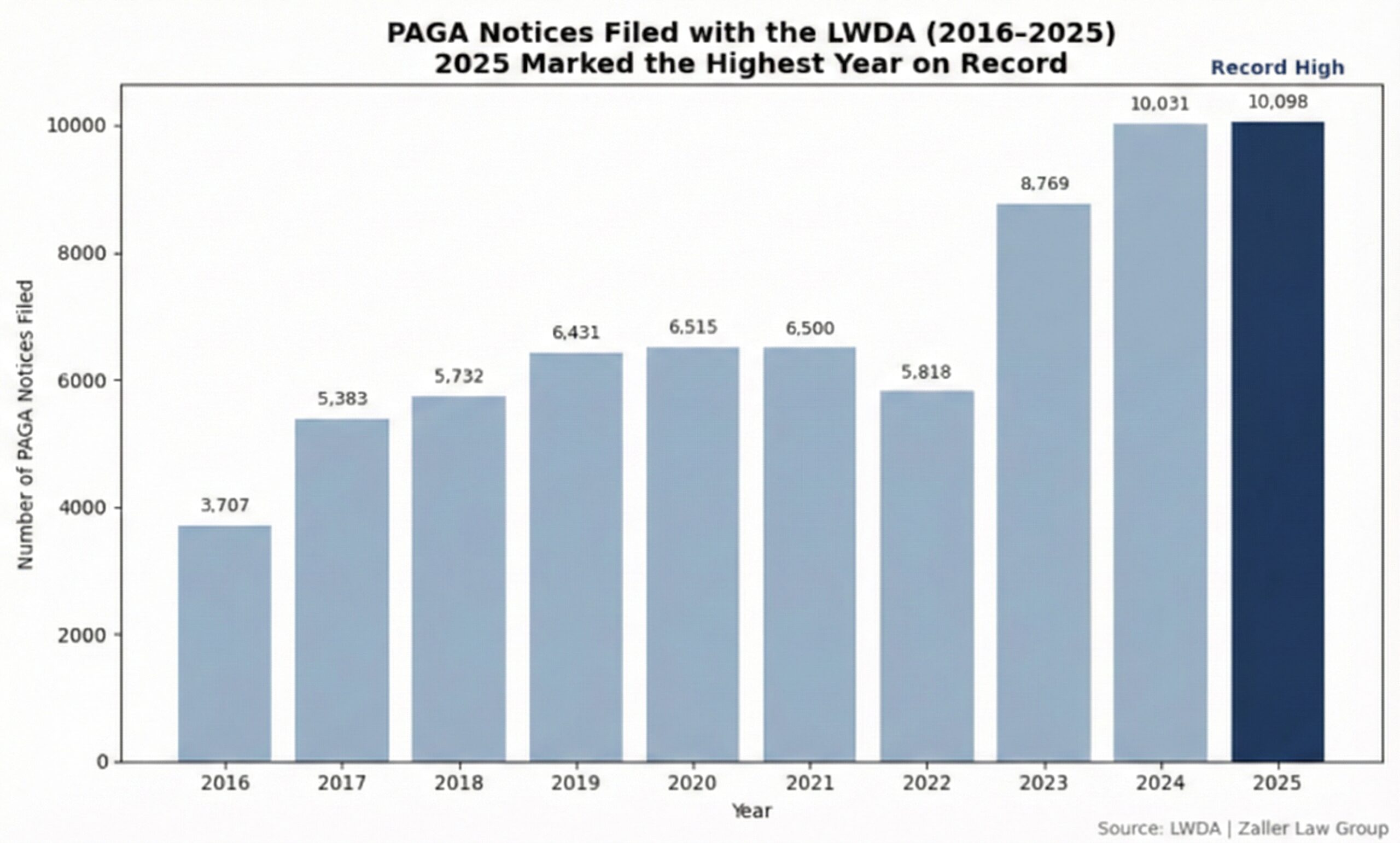
Despite the highly publicized 2024 PAGA reforms, 2025 became the largest year yet for PAGA LWDA filings. That reality has

As California employers enter 2026, one thing is clear: PAGA risk is not going away—and it is not plateauing.

The numbers tell the story. Despite the highly publicized 2024 PAGA reforms, 2025 became the largest year yet for PAGA filings. That reality should reset expectations for California employers. Reform did not reduce filings—it changed how

Happy Holidays! As we close out 2025, I’m reflecting on an incredible year at Zaller Law Group. This year brought both challenges and opportunities for California employers—from navigating new 2026 legislation to managing the ongoing wave of PAGA litigation, to embracing AI tools that are transforming how businesses operate.

Despite the complexity of California’s regulatory

For most California employers, employee time and pay data has historically been treated as a legal obligation—something you keep because the law requires it, not because it creates value.

That mindset needs to change in 2026.

After years of defending employers in wage-and-hour class actions and PAGA cases, I have seen firsthand how employee data

After more than twenty years defending California employers, I have seen a consistent pattern: even companies with sophisticated systems struggle with one of the most fundamental compliance obligations in California employment law—maintaining, accessing, and analyzing employee time records. These challenges are not merely operational inconveniences. They routinely lead to unnecessary legal exposure, inflated PAGA penalties