What “Reasonable Steps” Really Mean in 2026: How California Employers Reduce PAGA and Employment Litigation Exposure

As California employers move through 2026, one thing is clear: employment litigation—and PAGA litigation in particular—is not slowing down.

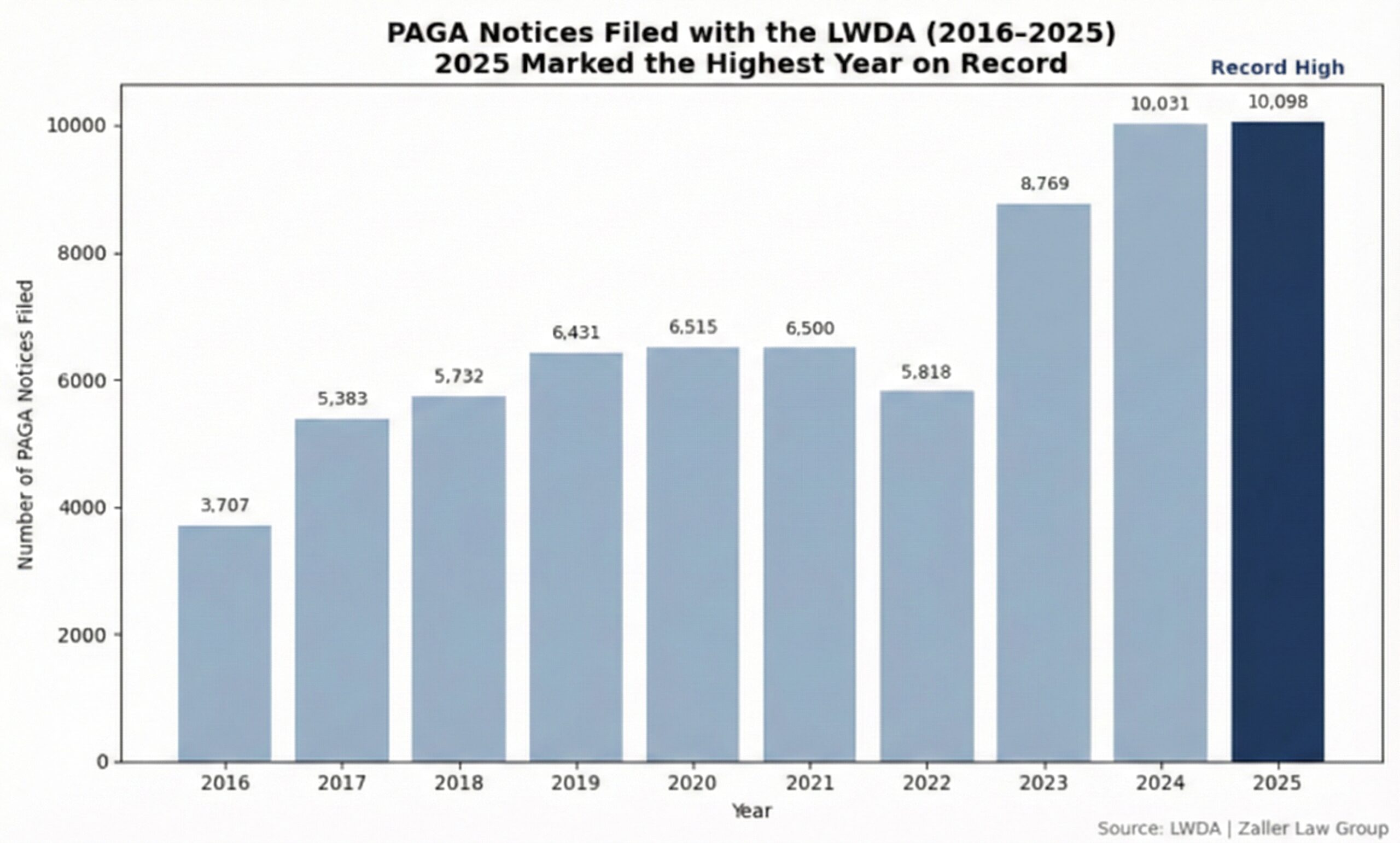
Despite the highly publicized 2024 PAGA reforms, 2025 became the largest year yet for PAGA LWDA filings. That reality has

As California employers enter 2026, one thing is clear: PAGA risk is not going away—and it is not plateauing.

The numbers tell the story. Despite the highly publicized 2024 PAGA reforms, 2025 became the largest year yet for PAGA filings. That reality should reset expectations for California employers. Reform did not reduce filings—it changed how

Happy Holidays! As we close out 2025, I’m reflecting on an incredible year at Zaller Law Group. This year brought both challenges and opportunities for California employers—from navigating new 2026 legislation to managing the ongoing wave of PAGA litigation, to embracing AI tools that are transforming how businesses operate.

Despite the complexity of California’s regulatory

For most California employers, employee time and pay data has historically been treated as a legal obligation—something you keep because the law requires it, not because it creates value.

That mindset needs to change in 2026.

After years of defending employers in wage-and-hour class actions and PAGA cases, I have seen firsthand how employee data

After more than twenty years defending California employers, I have seen a consistent pattern: even companies with sophisticated systems struggle with one of the most fundamental compliance obligations in California employment law—maintaining, accessing, and analyzing employee time records. These challenges are not merely operational inconveniences. They routinely lead to unnecessary legal exposure, inflated PAGA penalties

The beginning of 2025 presents an ideal opportunity for companies to perform a California employment law audit. This proactive step ensures your policies align with current regulations, your managers receive proper training, your company retains required records for the appropriate duration, and will greatly reduce potential PAGA penalties under the 2024 PAGA reform. To help

With California’s recent reforms to the Private Attorneys General Act (PAGA), employers now have an unprecedented opportunity to significantly reduce their potential liability for labor code violations. One of the most crucial changes under the reformed PAGA is the introduction of penalty caps for employers who demonstrate good faith efforts to comply with labor

On June 18, 2024, Governor Newsom announced a compromise to reform California’s Private Attorneys General Act (PAGA). This announcement follows intense negotiations prompted by a looming ballot measure to repeal PAGA this November. With PAGA cases skyrocketing and average settlements reaching $1.1 million, this reform package introduces crucial changes for California employers. Attorneys Anne McWilliams