
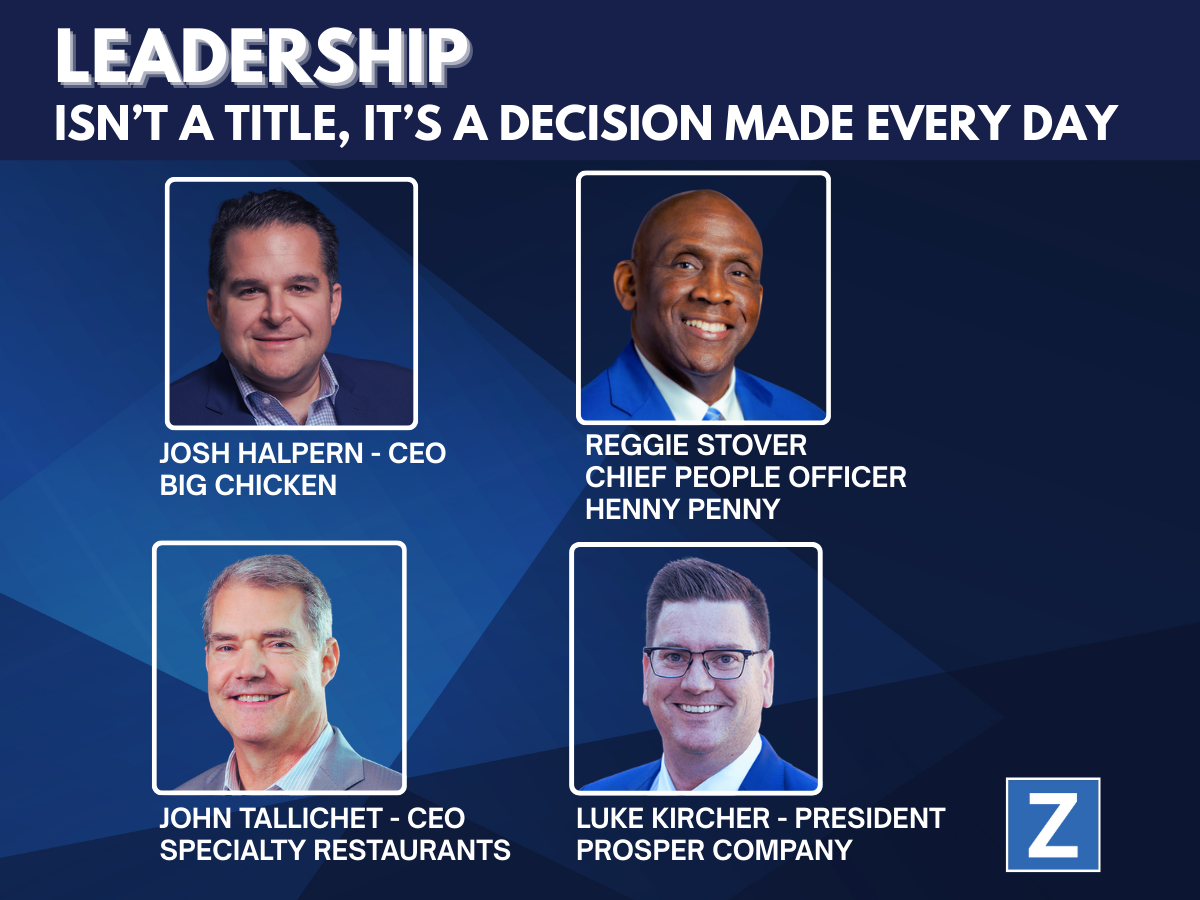
Last August at the Prosper Forum at the Ritz-Carlton, Amelia Island, we recorded a live conversation on a simple premise: leadership isn’t a title. It’s a decision you make every day.
I moderated a panel with leaders who build teams, carry accountability, and operate in environments where execution matters:
John Tallichet, CEO of Specialty Restaurants
Reggie Stover, Chief People Officer of Henny Penny
Josh Halpern, CEO of Big Chicken / Craveworthy Brands
Luke Kircher, President of Prosper Company
Michael Beck, CEO of Inc Tank GTM
Here are the five most useful takeaways, in their words and in practical terms.
1. Leadership is responsibility, not authority.
A recurring theme was that leadership shows up the moment people rely on you, not when you get the title. Reggie tied it to early life and the burden of being responsible for others. Josh framed it as being “worthy of follow,” pointing out that everyone has had “bosses” who weren’t leaders. Luke made it clear leadership isn’t a finish line; it’s an ongoing expansion of capability and responsibility.
Practical takeaway: If you’re evaluating leaders, don’t ask “How senior are they?” Ask “Do people naturally look to them when it gets hard?” That’s the job.
2. The best leaders don’t decide in a vacuum—but they do decide.
Two points held together beautifully: Josh emphasized gathering input from the people “in the trenches,” and then owning the final call. Reggie reinforced a hard-earned lesson from military training: the most dangerous failure isn’t a wrong decision; it’s indecision. John echoed the importance of decision-making under pressure in high-volume operations.
Practical takeaway: Build a culture where (1) decisions are informed by the people closest to the work, and (2) someone is accountable for making the call. “Consensus” can’t become a hiding place.
3. Selecting future leaders is an ethos test: team-first, coachable, accountable.
Reggie looks for people who raise their hand, bring energy, ask questions, and show courage. Josh described his “secret sauce” as selecting for people who care about legacy, put the team above themselves, celebrate wins loudly, and take accountability without excuses. John highlighted the disqualifier: “heroes” who want it to be about them. He also stressed coachability—especially the ability to take feedback without making it personal.
Practical takeaway: Performance isn’t enough. Your leadership pipeline should screen for ethos: team orientation, accountability, and coachability under pressure.
4. Development happens through ownership, exposure, and real stretch.
The panel converged on a critical idea: you can’t train leaders only with coursework. You train them by giving them ownership and letting them stretch into ambiguity.
Josh shared a defining lesson from early in his career: when he asked his boss to choose between two agencies, the response was, “If I have to do for you, I don’t need you.” The point wasn’t cruelty; it was ownership. Reggie described the intentional HR track (onboarding → goal setting → performance reviews → talent assessment → succession planning → development plans, including tools like 9-box when done correctly). Luke added a key caution: growth requires self-reflection about timing and sacrifice. Some people can lead, but “not right now,” and forcing that path can create burnout and personal cost.
Practical takeaway: Promote with a plan. Then “stretch” with support. Ownership without coaching is abandonment; coaching without ownership is stagnation.
5. The real differentiator is communication and vulnerability.
Reggie called communication the most critical leadership skill—whether on the battlefield, the basketball court, or in the boardroom. Josh added the trait that too many leadership conversations skip: vulnerability. The willingness to say, “I am the problem,” not as self-flagellation, but as ownership—and therefore the ability to fix it with the team.
John’s closing story tied it together: a leader made an early major mistake after rejoining the company, learned from it (by listening to the local team), and became a top-three leader. The through-line: leaders need grace to recover, but they must learn, communicate, and adjust.
Practical takeaway: If you want durable leadership cultures, normalize two things: direct communication and productive vulnerability. That’s how teams execute consistently at scale.
Watch the full panel on YouTube
If you’re a founder, executive, HR leader, or operator responsible for people and performance, this conversation will give you practical perspective from leaders in the arena—on hiring, accountability, culture design, succession, and building teams that execute.
You can watch the full video on YouTube here (and if you’re sharing it internally, it’s an excellent “leadership bench” discussion starter for your next ops meeting).